
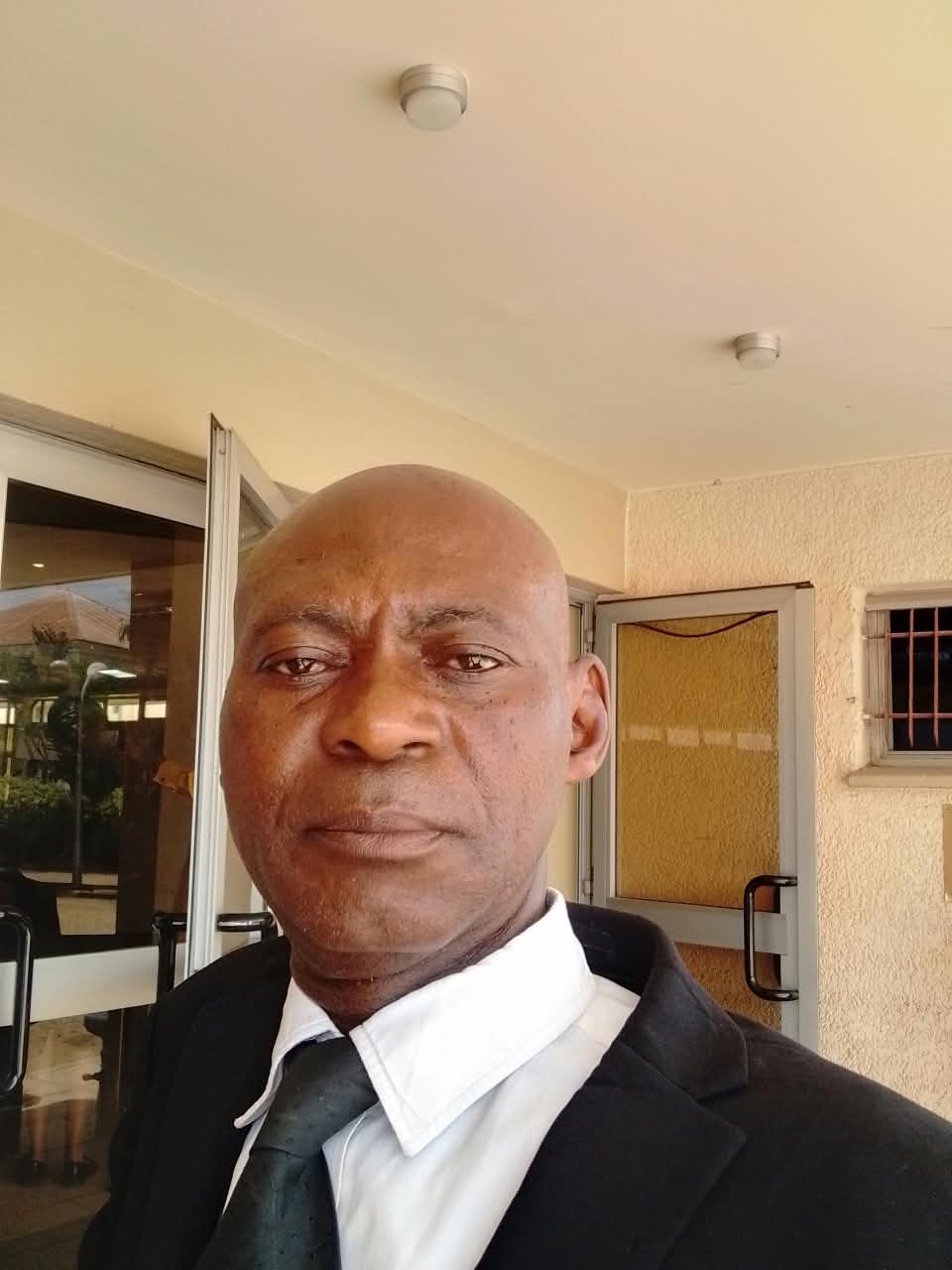
An Independence Day Address by Barr. Samuel Egburonu, Secretary, Governing Board, Guild of Interfaith Media Practitioners Nigeria (GIMP-Nigeria)
Fellow Nigerians, distinguished religious leaders, traditional rulers, members of the media, civil society actors, women and youth leaders, and compatriots at home and abroad,
As Nigeria marks 66 years of independence, we at the Guild of Interfaith Media Practitioners Nigeria (GIMP-Nigeria) extend warm greetings to all Nigerians and, on behalf of the Governing Board and the entire Guild, we call for renewed commitment to ethnic and religious tolerance as a foundation for peace, national cohesion and socio-economic advancement.
Our 66th Independence Anniversary is more than an occasion for ceremonies, speeches and patriotic songs. For us, this anniversary is another opportunity for sober reflection on where we have come from, where we are today and, most importantly, the kind of Nigeria we want to bequeath to future generations.
Nigeria is a nation of extraordinary diversity. We are home to hundreds of ethnic and linguistic communities, different religious traditions and varied cultural identities. This diversity is one of our greatest national assets.
But diversity becomes a problem only when we allow it to be a basis for discrimination, suspicion, hatred or violence.
The challenge before us as country, therefore, is not how to eliminate our differences. It is how to transform our differences into sources of strength rather than instruments of division.
OUR DIVERSITY IS A NATIONAL BLESSING
The Qur’an reminds humanity in Surah Al-Hujurat 49:13:
«“O mankind! We created you from a male and a female, and made you into nations and tribes, that you may know one another.”»
This profound message provides an important foundation for Nigeria’s interfaith and intercultural relations.
Our ethnic and religious differences should enable us to know, appreciate and learn from one another.
Similarly, Bible reminds us in Psalm 133:1:
«“Behold, how good and how pleasant it is for brethren to dwell together in unity!”»
These teachings demonstrate that peaceful coexistence is not a concession we make to one another. It is a divine responsibility.
For Nigeria, this responsibility has become more urgent than ever.
INTOLERANCE HAS AN ECONOMIC COST
We must begin to understand that ethnic and religious tolerance should not be viewed simply as a matter of religious morality or social courtesy. No!
It has direct consequences to our national economy and individual wellbeing.
We must all know that whenever violence erupts, businesses close.
When communities become insecure, farmers abandon their fields.
When citizens are displaced, homes, schools and livelihoods are destroyed.
When ethnic or religious tensions rise, investors become more cautious.
When communities distrust one another, economic cooperation becomes difficult.
And when young Nigerians are manipulated into violence, the country loses productive energy that could otherwise be channelled into education, technology, agriculture, entrepreneurship and innovation.
Peace, therefore, is not merely a spiritual virtue. It is an economic resource.
A peaceful society attracts investment.
A stable society encourages entrepreneurship.
A tolerant society promotes trade.
A cohesive society creates the confidence necessary for long-term development.
If Nigeria is to unlock its enormous socio-economic potential, we must therefore invest deliberately in social cohesion and interfaith understanding.
NO SINGLE GROUP CAN BUILD NIGERIA ALONE
At 66, we must confront the reality that Nigeria of our dream can only be built when we honestly agree to cooperate with one another and to act in unity and not by continuous promotion of ethnic, religious or politically – based hatred.
We must come to terms with the fact that Nigeria belongs to all of us.
The farmer needs the trader.
The trader needs the transporter.
The manufacturer needs the consumer.
The North needs the South, just as the South needs the North.
The East needs the West, just as the West needs the East.
Our destinies are intertwined. This is the understanding that will help us build our dream Nigeria.
The food we eat, the goods we trade, the businesses we operate, the roads we travel and the institutions we depend upon, all demonstrate one fundamental reality: Nigeria is interconnected.
Our diversity should therefore become a platform for cooperation rather than competition based on fear and suspicion.
THE SPECIAL RESPONSIBILITY OF RELIGIOUS LEADERS
Our religious leaders have a particularly important responsibility in this national journey.
Imams, pastors, priests and other faith leaders occupy positions of considerable moral influence. They must therefore always remember that their words matter in our society.
They must always bear in mind that that simple message delivered from a mosque, a church on online, can calm an angry community. It can also, if irresponsibly delivered, deepen resentment.
As a country therefore, we must ensure that our religious platforms become centres of peace, reconciliation anchored on knowledge so as to promote sound and unbiased moral instruction. It is only then that Faith leaders can nurture responsible citizenship.
In Nigeria, Muslim and Christian leaders have the responsibility of speaking clearly against violence, hate speech, religious bigotry and ethnic discrimination. If they fail to faithfully accomplish this divine responsibility, they will have to give account to the Almighty, who in His wisdom, created and put us together in this space called Nigeria, not minding our diversity.
It is our plea therefore that Faith Leaders in Nigeria should teach their followers that disagreement does not make another person an enemy.
The Almighty created man and gave him free will. So, we can hold firmly to our religious convictions while respecting the right of others to hold theirs.
Faith should build bridges, not walls.
The Qur’an says in Surah Al-Ma’idah 5:32 that saving one life is akin to saving humanity.
The Bible teaches in Romans 12:18:
«“If it be possible, as much as lieth in you, live peaceably with all men.”»
These principles should guide our conduct beyond our places of worship.
FROM TOLERANCE TO COOPERATION
However, Nigeria needs to move beyond simply tolerating one another.
We need to cooperate with one another.
Imagine Christian and Muslim leaders working together to support vulnerable families.
Imagine interfaith organisations jointly promoting education and youth entrepreneurship.
Imagine communities of different ethnic backgrounds cooperating on local development and security initiatives.
Imagine religious institutions providing platforms where young Nigerians can meet across ethnic and religious boundaries, exchange ideas and develop joint enterprises.
This is the kind of social capital Nigeria urgently needs.
Interfaith engagement should not be restricted to moments of crisis.
It should become a permanent instrument of national development.
THE MEDIA SHOULD PROMOTE UNDERSTANDING
As an organisation committed to interfaith media engagement, GIMP-Nigeria recognises the enormous responsibility of journalists and media practitioners.
The media can either deepen divisions or help heal them.
Responsible journalism requires accuracy, verification, fairness and sensitivity, particularly when reporting issues involving religion, ethnicity and communal conflicts.
In the age of social media, misinformation can travel across Nigeria within minutes.
A false allegation can trigger anger.
An inflammatory headline can reinforce stereotypes.
An unverified report can endanger lives.
We therefore urge Nigerian media practitioners to practise journalism that informs without inflaming, investigates without demonising and reports conflict without unnecessarily widening it.
The microphone must become an instrument of peace rather than a weapon of division.
OUR YOUNG PEOPLE MUST NOT BE RECRUITED INTO HATRED
Nigeria’s young population represents one of our greatest national resources.
But young people can become vulnerable when unemployment, frustration and identity politics combine.
We must therefore give our youth something greater than ethnic or religious grievances to believe in.
Let us recruit them into entrepreneurship.
Let us equip them with technological skills.
Let us encourage agriculture, creative industries and innovation.
Let us expose them to interfaith and intercultural engagement.
Let us teach them that the Nigerian who speaks another language or worships differently is not automatically a threat.
Our young people should inherit opportunities rather than prejudices.
GOVERNMENT MUST ALSO BUILD TRUST
Citizens have responsibilities, but government and public institutions also have a fundamental responsibility to create an environment in which every Nigerian feels valued.
National cohesion is strengthened when citizens have confidence that institutions will treat them fairly.
Justice, accountability, equal citizenship, effective security and equitable access to opportunities are essential ingredients of national unity.
Government-community relations must therefore be strengthened.
Security cannot be achieved solely through force. It also requires intelligence, community participation, dialogue, trust and prevention.
This is where government, religious institutions, traditional authorities, communities and the media must work together.
OUR INDEPENDENCE MUST BECOME A LIVING RESPONSIBILITY
At 66, Nigeria’s independence should remind us that nation-building is an unfinished project.
Political independence gave us sovereignty.
But the deeper work of building a just, peaceful and prosperous society continues.
We must liberate ourselves from the mentality that another Nigerian’s success diminishes our own.
We must reject the politics of permanent suspicion.
We must reject religious bigotry.
We must reject ethnic superiority.
We must reject the use of identity as a weapon for political mobilisation.
Instead, we must embrace a citizenship in which every Nigerian is valued.
A CALL TO NIGERIANS
On this 66th Independence Anniversary, GIMP-Nigeria calls on Nigerians of all faiths and ethnic backgrounds to make a personal commitment to peace.
Let the Muslim protect the dignity of his Christian neighbour.
Let the Christian protect the dignity of his Muslim neighbour.
Let every ethnic community respect the humanity and cultural identity of others.
Let parents teach their children tolerance.
Let religious leaders preach peace.
Let journalists report responsibly.
Let political leaders promote unity.
Let traditional rulers encourage reconciliation.
Let young Nigerians choose innovation over violence and enterprise over hatred.
And let every citizen remember that Nigeria’s future cannot be outsourced.
THE NIGERIA WE WANT
The Nigeria we seek is one where a person’s religion does not determine the value placed on his or her life.
A Nigeria where ethnicity does not determine access to opportunity.
A Nigeria where political differences do not become permanent hatred.
A Nigeria where Muslims, Christians and people of other faith traditions can worship freely and live peacefully.
A Nigeria where diversity is recognised not as a burden but as a source of creativity, resilience and strength.
A Nigeria where peace creates the environment for agriculture, industry, education, investment, innovation and entrepreneurship to flourish.
This is not an impossible dream.
It is a national responsibility.
CONCLUSION
Fellow Nigerians, our 66th Independence Anniversary should therefore be both a celebration and a call to conscience.
We have travelled a long road as a nation. We have experienced moments of triumph and periods of profound difficulty. Yet, through it all, Nigeria has endured.
Our greatest task now is to ensure that our diversity becomes a foundation for national renewal.
Let us build bridges where others seek to build walls.
Let us choose dialogue where others choose confrontation.
Let us choose cooperation where others promote division.
Let us choose truth where misinformation threatens peace.
And let us choose Nigeria where narrow ethnic and religious interests seek to divide us.
As the Qur’an reminds us, humanity was created as different nations and tribes “that you may know one another.”
And as the Bible teaches, “Blessed are the peacemakers.”
May these principles guide our national journey.
May Nigeria’s Muslims, Christians and people of other faiths continue to discover the common humanity that binds us together.
May our ethnic diversity become a source of strength.
May our religious diversity become a platform for mutual understanding.
May our young people inherit a country of opportunity rather than division.
And may the next chapter of Nigeria’s history be defined by peace, justice, tolerance, inclusive development and shared prosperity.
Happy 66th Independence Anniversary to all Nigerians.
God bless the Federal Republic of Nigeria.
God bless our diverse communities.
God bless the Nigerian people.
– Barr. Samuel Egburonu is Secretary, Governing Board, for and on behalf of the Guild of Interfaith Media Practitioners Nigeria (GIMP-Nigeria)